
Embracing Agroecology for Better Harvests: The Journey of Zuhura Hussein

For many years, Zuhura Hussein, a smallholder farmer from Chalinze District, relied on conventional farming practices, depending heavily on chemical fertilizers. Despite investing significant time, labour, and money, her maize production remained below expectations, and the rising cost of agricultural inputs made farming less profitable. Normally harvested 2 bags of maize from her one acre farm.
Everything changed when Zuhura became a participant at SAT in 2024. Through agroecology training sessions, she learned practical and sustainable farming techniques designed to improve soil health, reduce production costs, increase productivity, and protect the environment including how to prepare and use organic compost manure instead of relying solely on chemical fertilizers, and how to prepare organic pesticides from locally available materials.
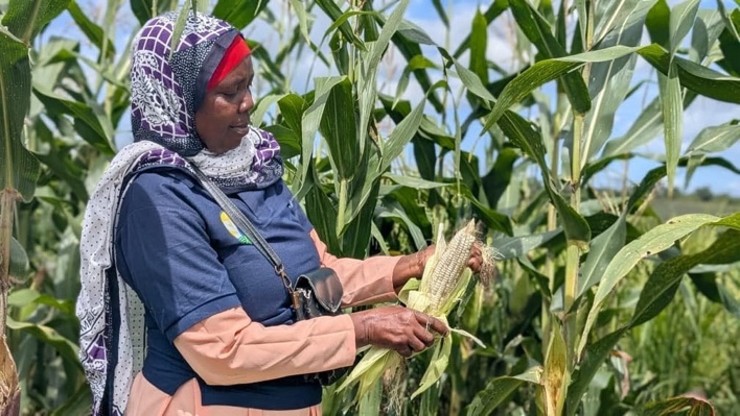
Inspired by the training, Zuhura applied these agroecological practices on her one-acre maize farm, preparing compost manure and organic pesticides from locally available resources practices she had never used before joining the project. The results exceeded her expectations (she harvested 10 bags of 7 buckets of maize): healthier maize plants, improved soil fertility, and a stronger, more uniform crop, with pest and disease attacks effectively minimized without expensive chemical products.
Beyond increased yields, Zuhura benefited economically by substantially reducing her production costs, improving the profitability of her farming while working in a more environmentally sustainable way. Today, she has become an advocate for agroecological farming within her community, confidently sharing her experience with fellow farmers and encouraging wider adoption of the sustainable practices promoted through SAT.


Related Posts


